
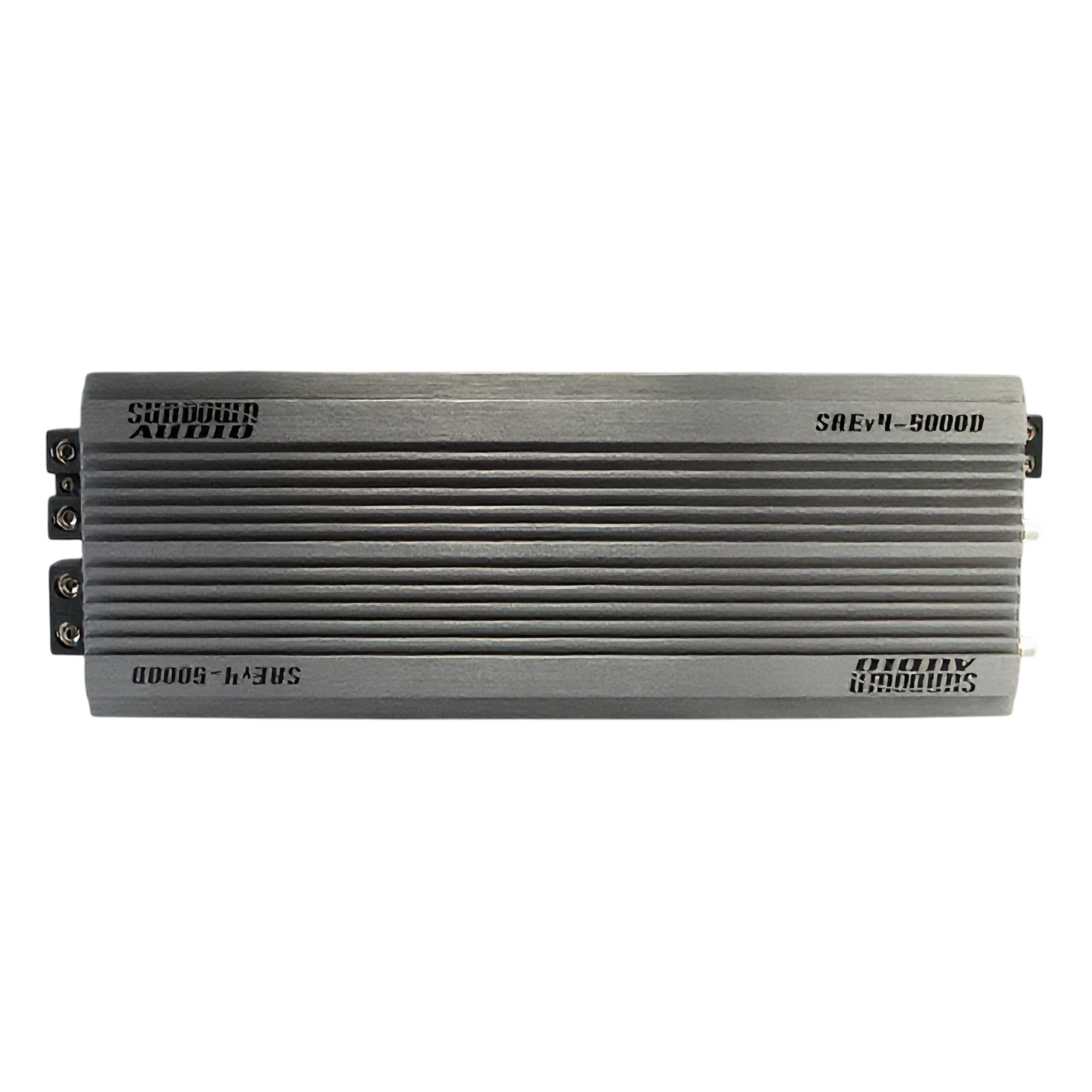
Does bass boost give you more bass? Yes — but not for free, and not the way most people think. The bass boost control on a car amplifier adds output at one specific frequency, which can make your system hit harder — or blow your sub if you use it wrong. Here's exactly what bass boost does, when to use it, and how to use it safely.

What Does Bass Boost Actually Do?
Bass boost is a fixed-frequency equalizer built into your amplifier — usually centered around 40-45Hz. When you turn it up, it increases the amp's output at that frequency, so yes, you hear more bass. But it's really just adding gain at one spot in the frequency range, not magically creating free output. That extra output draws more power and pushes your subwoofer harder.
Does Bass Boost Damage Your Amp or Sub?
It can, if you're not careful. Because bass boost adds a big spike of output at one frequency, it can quickly push your amplifier into clipping (distortion) and send your subwoofer past its limits — the leading cause of blown subs. If you crank both the gain and the bass boost, you're stacking output and almost guaranteed to clip.
How to Use Bass Boost the Right Way
- Set your gain first with bass boost at zero, using our amp tuning guide.
- Add bass boost sparingly — a few dB at most — and listen for distortion.
- Re-check your gain after adding boost, since the two stack.
- If you want more bass, the better long-term fix is a properly sized subwoofer box, a matched amplifier, and a stronger electrical system — not just turning a knob.
Bass Boost vs a Bigger System
Bass boost is a tuning tool, not a substitute for proper hardware. If your system isn't loud enough even with everything set correctly, you'll get far better, cleaner results from the right subwoofer and enclosure than from maxing out the bass boost knob.
Bass Boost FAQ
Does bass boost give you more bass?
Yes. Bass boost adds output at a fixed frequency (usually around 40-45Hz), so you hear more bass. But it's adding gain at one spot, not free output, and too much can clip your amp and damage your sub.
Is bass boost bad for your subwoofer?
It can be. Excessive bass boost pushes your subwoofer past its limits and drives the amp into clipping, which is a leading cause of blown subs. Use it sparingly and re-check your gain.
Where should I set my bass boost?
Set the gain first with bass boost at zero, then add only a few dB of boost if needed, listening for distortion. Re-check the gain afterward since gain and bass boost stack.
Is it better to use bass boost or turn up the gain?
Neither should be maxed. Set the gain properly for a clean signal, and use bass boost lightly as a tuning tool. For more output, upgrade your sub, box and electrical instead.
Why does my bass distort when I turn up the bass boost?
Because bass boost adds a large output spike at one frequency, stacking on top of your gain and pushing the amp into clipping. Lower the bass boost and re-set your gain for clean output.

Leave a comment
This site is protected by hCaptcha and the hCaptcha Privacy Policy and Terms of Service apply.